
Public universities in Germany provide affordable, high-quality education with competitive admissions, while private universities offer easier entry and faster pathways at higher costs.

Germany is one of the world’s most popular study abroad destinations for international students, particularly those seeking high-quality education at a comparatively low cost. According to the German Academic Exchange Service (DAAD) and Federal Statistical Office of Germany (Destatis), Germany hosted over 458,000 international students in 2024, marking a growth of nearly 7% year-on-year. India is now the largest source country of international students in Germany, surpassing China, with more than 42,000 Indian students enrolled. Notably, over 90% of all students in Germany study at public universities, reflecting the dominance and credibility of the public higher education system.
(Sources: DAAD International Students Report 2024, Destatis, Study-in-Germany)
As students explore Germany as a destination, one fundamental question arises early in the planning stage: Should you choose a public university or a private university in Germany? The answer is not universal and depends on academic background, budget, language readiness, and long-term goals.
This guide explains the differences clearly and in depth.
Germany has a highly regulated and structured education system with more than 420 higher education institutions. These are broadly categorized into:
Public universities are funded by the federal states (Länder), which allows them to offer education at little or no tuition cost. Private universities operate independently and are funded primarily through student fees.
What makes Germany unique is that public universities dominate both enrollment and reputation, unlike many other countries where private institutions play a larger role.

Public universities are state-funded and strictly regulated by the German government. This ensures standardized academic quality, research integrity, and international recognition.
Private universities are self-funded institutions. While many offer modern infrastructure and industry-focused programs, their quality and recognition depend heavily on accreditation status.
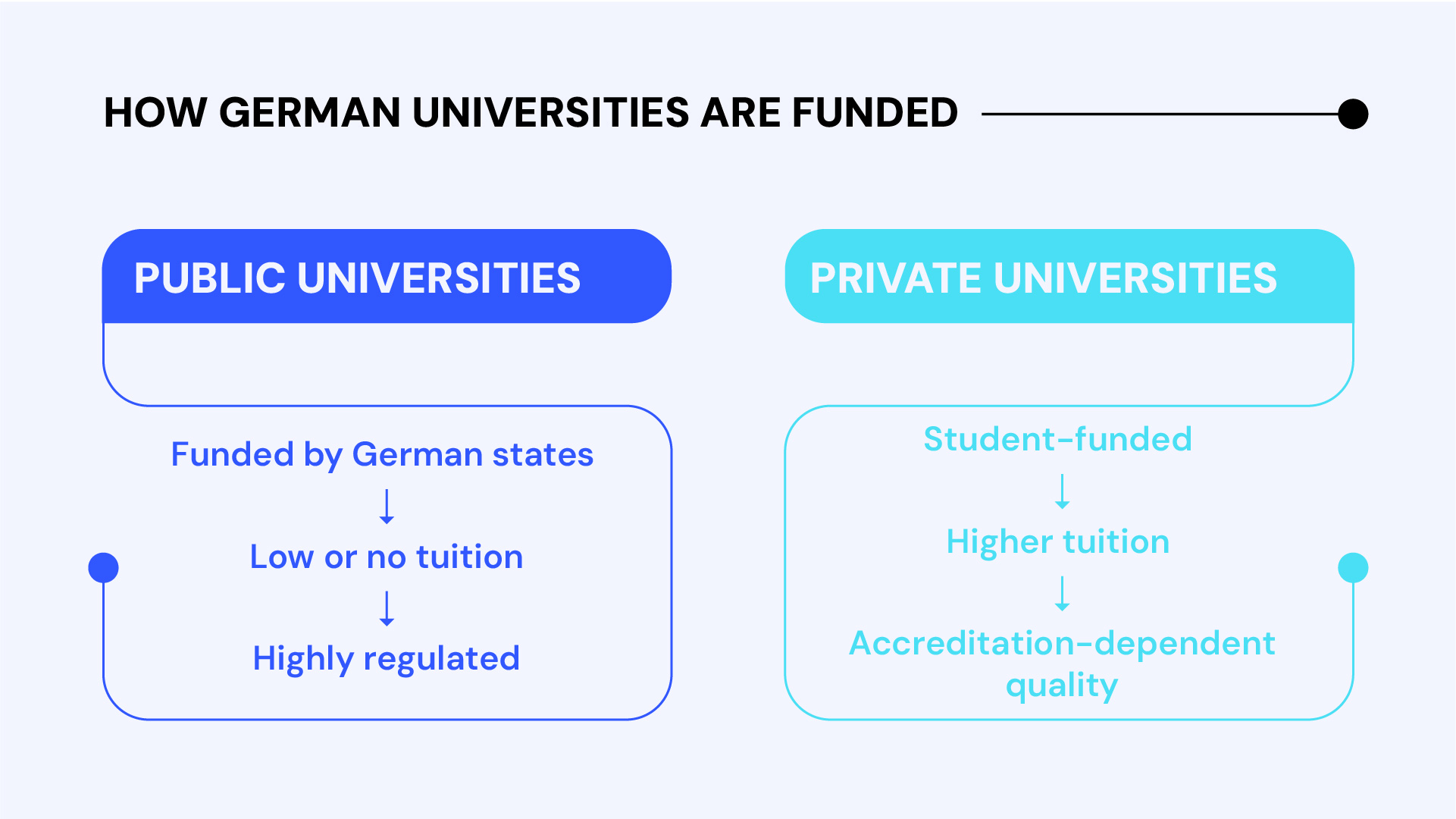
One of the biggest differences lies in cost.
Public universities typically charge only a semester contribution ranging from €150 to €350, which covers administration and public transport. Most public universities do not charge tuition fees, even for non-EU students (except in Baden-Württemberg).
Private universities charge €10,000 to €30,000 per year, depending on the program and institution.
Public universities traditionally emphasize:
Private universities often focus on:
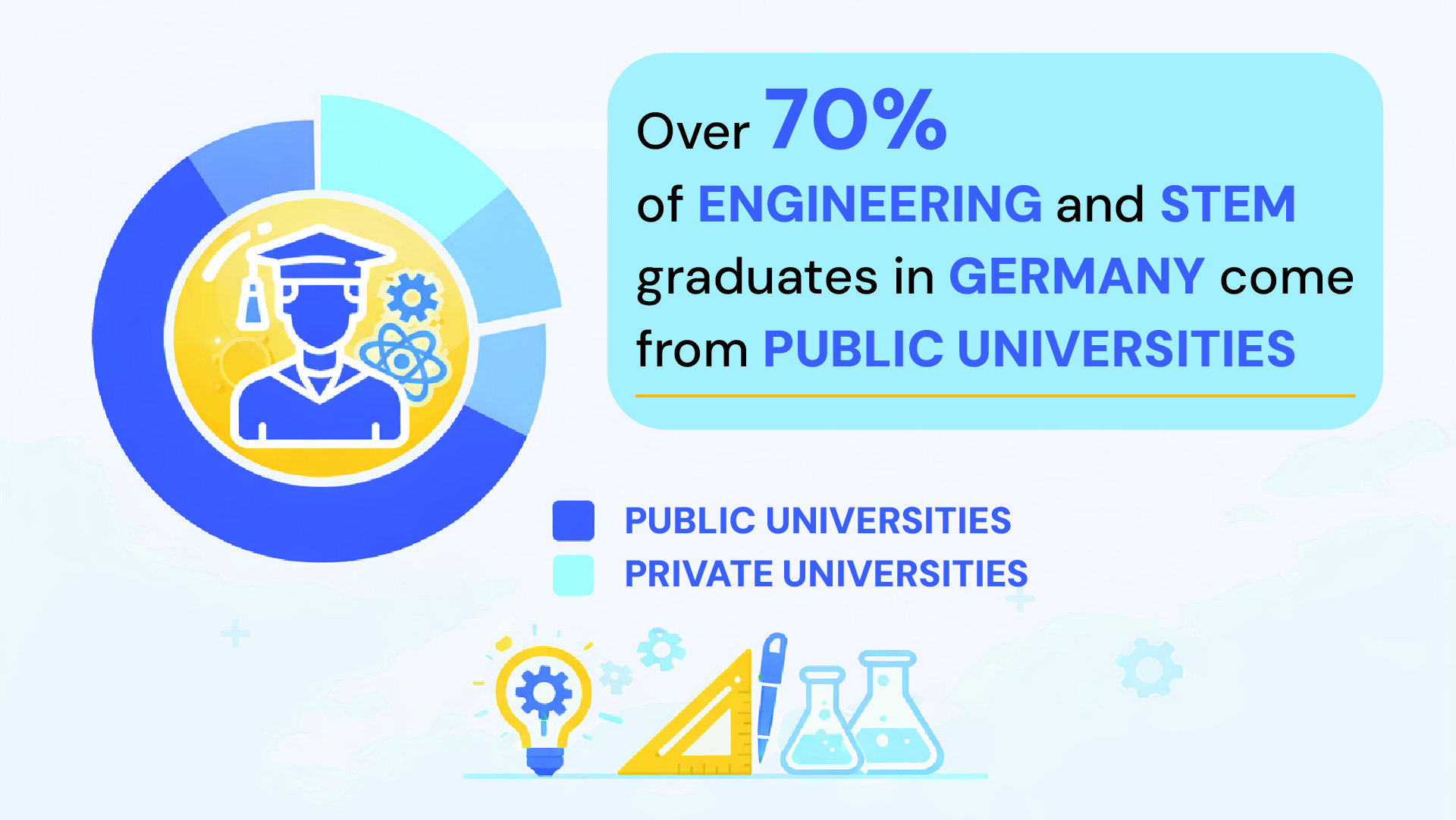
There is no absolute answer. The “better” option depends on how well the university aligns with a student’s profile and goals.
Public Universities Are Better Suited If You:
Private Universities Are Better Suited If You:
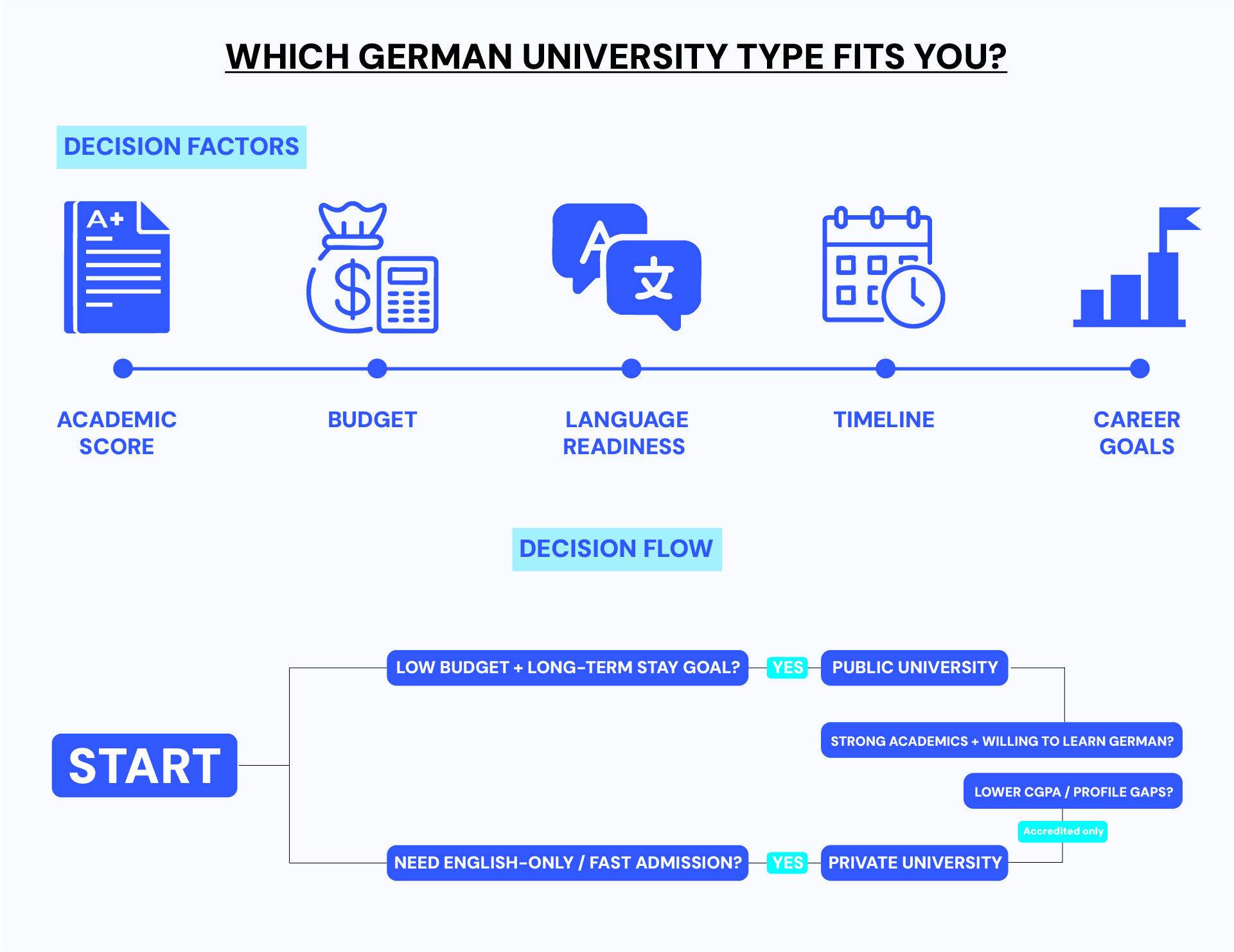
Public Universities – Pros
Public Universities – Cons
Private Universities – Pros
Private Universities – Cons
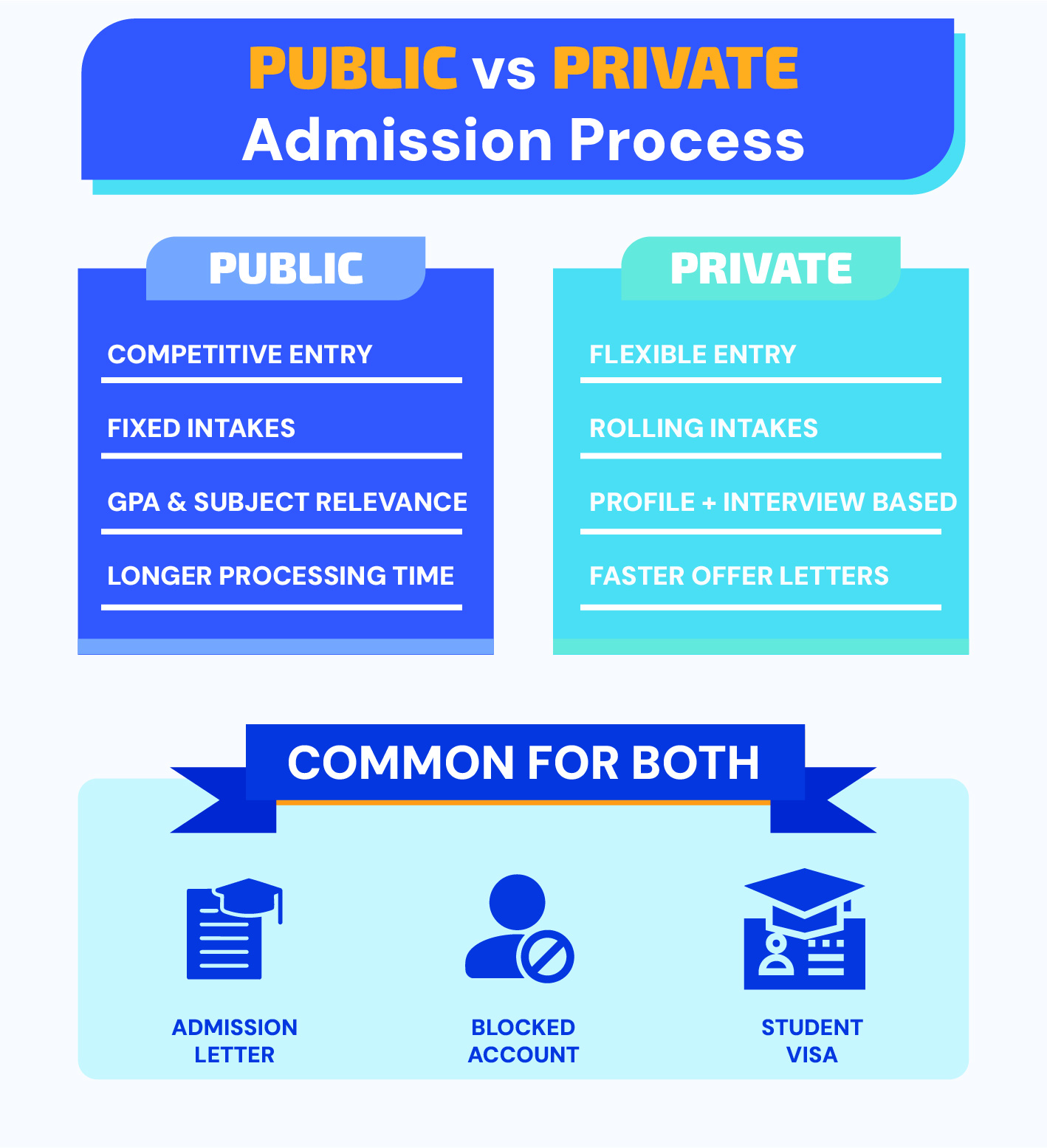
Public universities assess applicants on:
Private universities focus more on:
Acceptance rates are significantly higher at private universities, but this does not guarantee better outcomes.
While many master’s programs in Germany are taught in English, German language skills remain critical for part-time work, internships, and full-timeemployment.
Public universities often require:
Private universities may allow:
Degrees from public universities are automatically recognized in Germany. Private universities must be:
German employers generally value:
Graduates from both public and private universities are eligible for:
However, public university graduates often integrate faster due to stronger academic recognition and language exposure.
In reality, outcomes depend on planning, profile fit, and execution.
Key Takeaways
Choosing between public and private universities in Germany requires more than online research. It demands profile evaluation, goal clarity, and strategic planning.
Winny supports students with:
The focus remains on clarity, credibility, and outcomes, not shortcuts.


